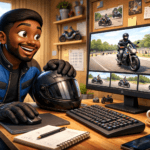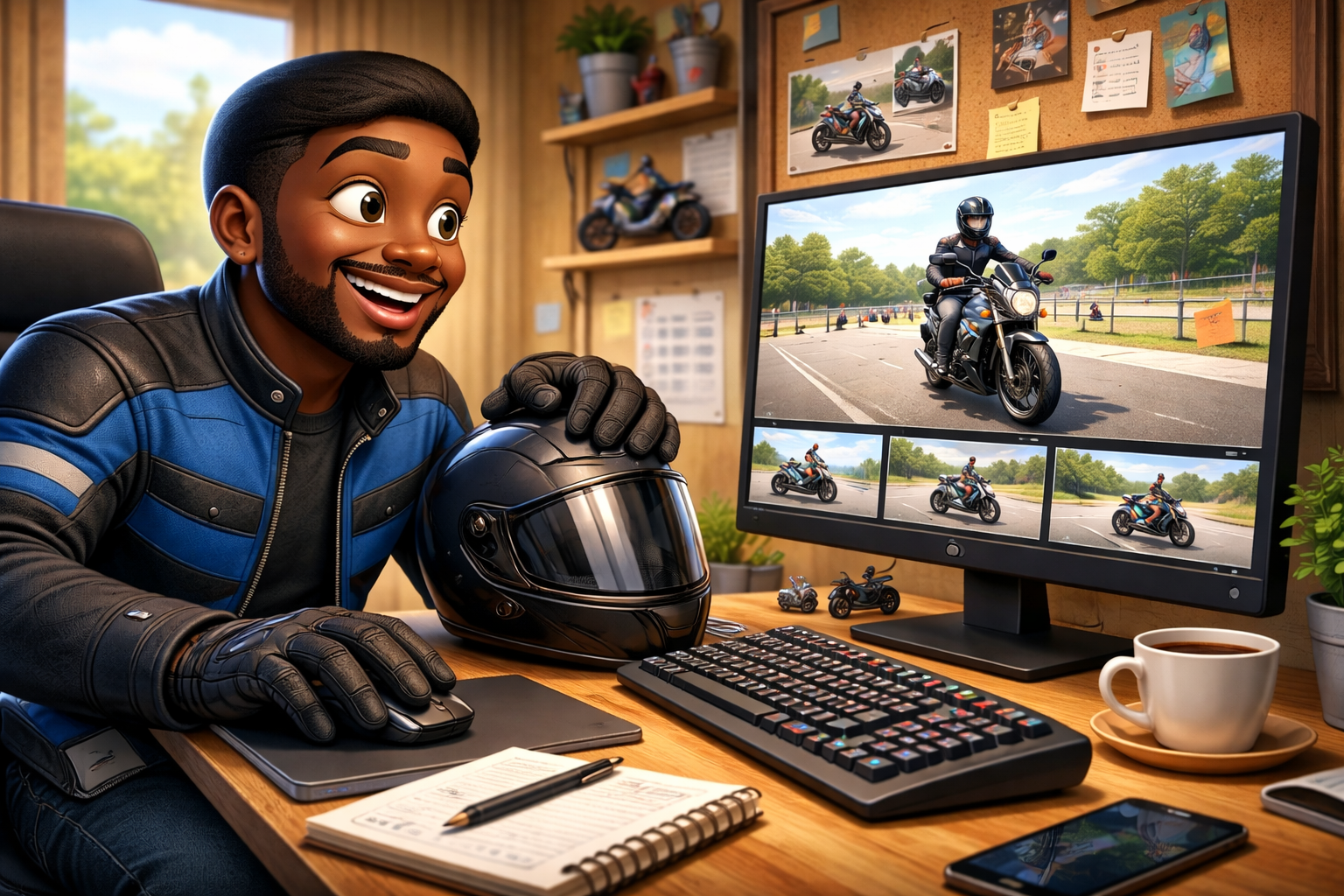
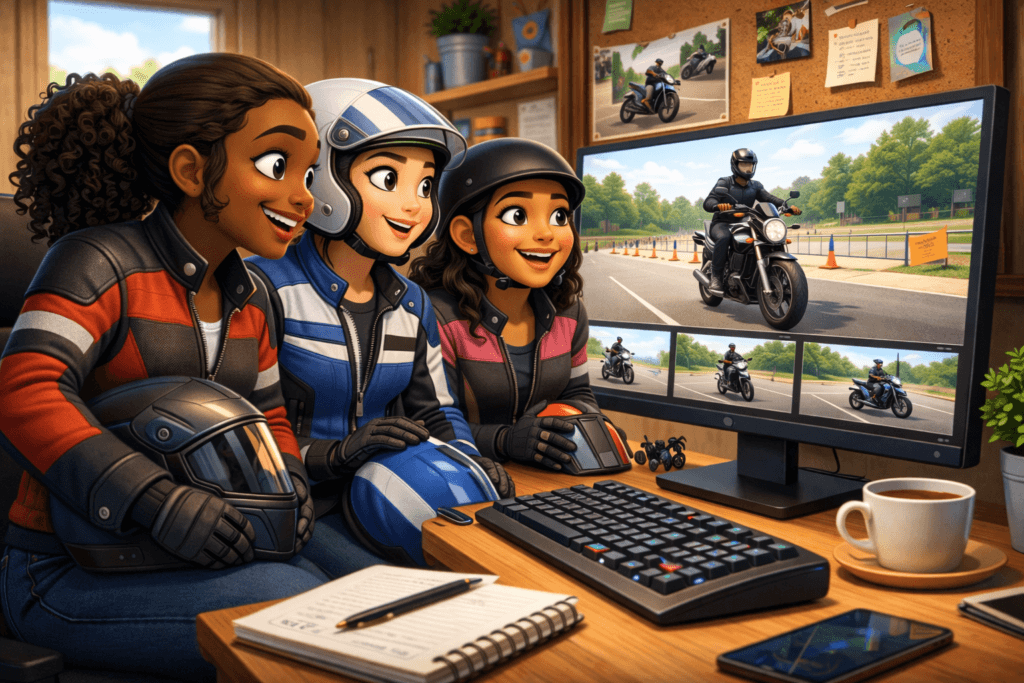
Picture this: you’re in pajamas at your kitchen table, sipping coffee while scrolling through an online course about motorcycle safety. No helmet hair, no exhaust fumes, no awkward group introductions. Just you, your laptop, and a voice explaining throttle control. It sounds absurd at first. After all, riding is about the feel of the machine, the roar of the engine, the tilt of a lean. How could you possibly capture that on a screen? And yet, online and blended learning options for motorcycle training are becoming more popular.
The idea is simple: cover the bookwork online so you can save time for the actual riding later. You learn about protective gear, risk awareness, traffic strategies, and the physics of motorcycles from the comfort of home. Then, when you show up for the in-person range session, you’re ready to ride instead of slogging through lectures. It’s like studying the playbook before you step onto the field.
I talked to a rider who completed her theory sessions online before attending the range. “I liked being able to pause the video and rewind,” she said. “In a classroom, I’d be embarrassed to ask the instructor to repeat something.” For her, the online option made learning less intimidating and more personalized. That’s the appeal. It’s not a replacement for hands-on riding—it’s a preparation tool.
How Blended Learning Works in Practice
Blended courses usually split the training in half. The theory—things like accident statistics, lane positioning, and braking distances—gets delivered online. You can log in at midnight or on your lunch break, moving at your own pace. Once that’s done, you attend the in-person riding portion, where instructors focus only on skills you can’t learn from a screen.
One student told me he liked this model because it cut down on wasted time. “I didn’t have to sit in a classroom for hours listening to someone read from a manual. I did that online at home. When I got to the range, it was all throttle, clutch, and brakes.” The separation means the riding practice feels more immersive, like a workshop instead of a lecture hall.
Instructors see benefits too. With the online modules covering theory, they can focus their energy on coaching body position, head turns, and panic stops. They don’t have to cram safety lectures between drills. The blend makes the most of everyone’s time, which is why it’s spreading across states and programs.
The Limitations of Learning Through a Screen
Still, let’s be honest: you can’t learn to ride a motorcycle by clicking through slides. At some point, you need to throw a leg over the seat and feel the weight of the machine. Online learning is a tool, not a replacement. It works for teaching information, but not instincts. You can read about counter-steering all day, but until you lean into a curve, it’s just words.
That’s why blended courses work best when students take the online portion seriously. Skim through too quickly and you show up at the range clueless. One instructor told me about a student who admitted he “just clicked next” through the entire eCourse without reading. On the range, he froze when asked about lane positioning. The instructor sighed, “The computer can’t teach you if you’re not paying attention.”
So while online training is convenient, it also requires discipline. It asks you to be an active learner, not a passive scroller. And it highlights an important truth about motorcycling: shortcuts only work if they don’t cut corners.
Stories of Riders Who Loved the Flexibility
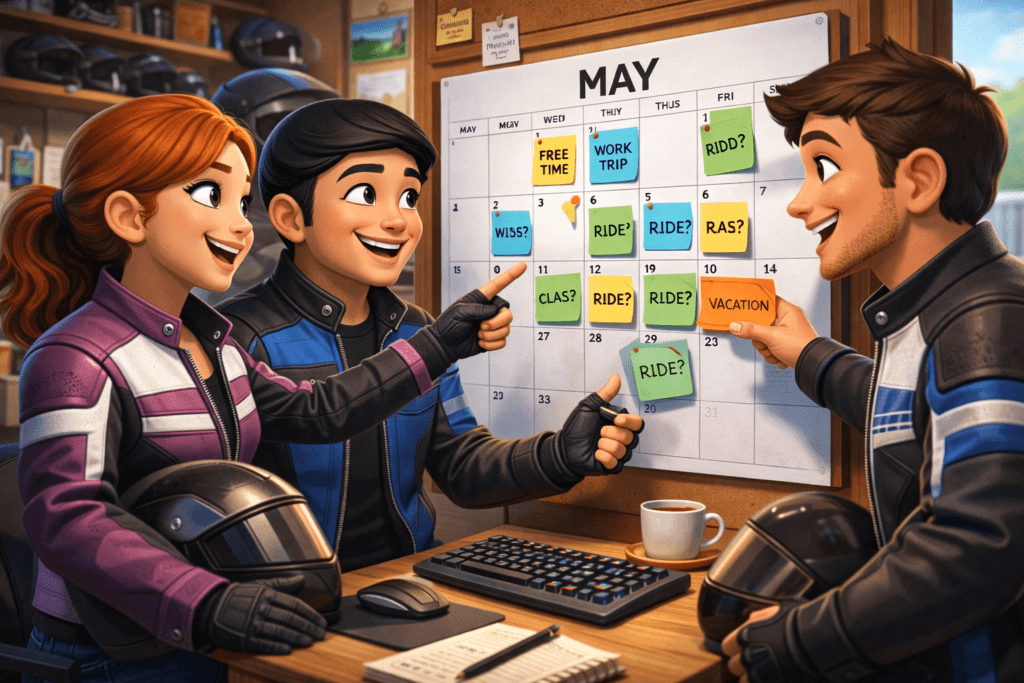
For many people, the online option is a lifesaver. Busy schedules, childcare, and work shifts make attending long classroom sessions difficult. Blended learning opens the door for riders who might otherwise skip training altogether.
Take Carla, a nurse who worked twelve-hour shifts. She couldn’t commit to classroom hours, but she completed the eCourse on her nights off. When she finally showed up for the riding portion, she felt prepared instead of frazzled. “Without the online part, I never would have done it,” she admitted.
Then there’s Ben, a single dad. He completed modules on his phone while his kids were at soccer practice. “It was the only way I could make it work,” he said. For him, the flexibility wasn’t just convenient—it was the difference between pursuing his riding dream or giving up on it. These stories show that technology isn’t just about convenience. It’s about access.
Will Online Learning Replace the Old Way?
The rise of eCourses raises the question: will traditional classroom motorcycle training disappear? Probably not. Some people thrive on in-person discussions, and some instructors prefer face-to-face teaching. There’s also the human element of community—meeting other riders, sharing nerves, building friendships. Online learning can’t replace that.
But it doesn’t need to. Blended learning offers choice, and choice means more people can find a path that works for them. The future probably looks like a mix: some students in classrooms, others online, all converging at the range where the real riding happens. The technology doesn’t erase tradition; it enhances it.
Think of it like music. Vinyl records didn’t disappear when streaming arrived. They coexist. Each has strengths, and people choose based on what fits their lifestyle. Motorcycle courses are heading the same way.
Riding into the Future of Training
The motorcycle world has always balanced tradition and innovation. Blended learning is just the latest example. It respects the core truth—that you have to ride to learn—but it adapts the preparation to modern life. Whether you’re a night owl, a busy parent, or someone who hates classrooms, online options open doors that used to stay shut.
The future might even go further. Virtual reality headsets could simulate traffic scenarios. AI coaches might track your posture and give feedback in real time. It sounds futuristic, but so did online modules a decade ago. What won’t change is the final step: throwing a leg over a real bike, turning the key, and feeling that engine come alive.
If you’ve been putting off training because you can’t fit it into your schedule, the blended path might be your solution. It proves that learning to ride isn’t just for people with free weekends and flexible jobs. It’s for anyone with the determination to carve out the time—even if part of that time is spent in slippers at your kitchen table.
Final Thought
Riding is supposed to make your life bigger, not shorter.
If something in this post made you think twice, good. That pause is where better decisions live.
Stick around.
Read more.
Learn from stories that weren’t free to earn.
Because the goal isn’t to ride harder.
It’s to ride longer.
— The Squirrelly Biker