Riding for Beginners
- Why the First Course Matters More Than You Think
- What Actually Happens in a Beginner Course
- The License Waiver and the Sweet Shortcut
- More Than Just Riding Skills
- The First Chapter of a Longer Story
“The bike does not care how good you think you are.” — Keith Code, motorcycle racer and founder of California Superbike School
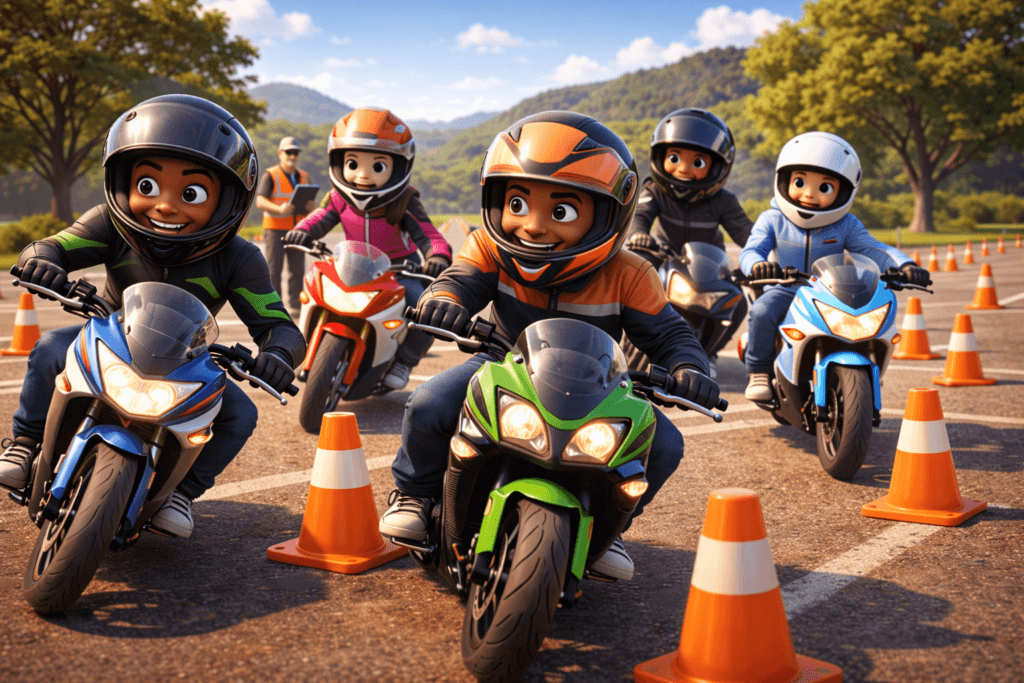
Learning to ride a motorcycle sounds like the start of an adventure novel. The wind in your face, the freedom of the open road, the mechanical heartbeat of a machine under your control. But before you’re out there pretending you’re in your own movie, you have to figure out one very unglamorous question: where do you start? That’s where the Beginner or Basic Rider Course comes in. For most people in the United States, the Motorcycle Safety Foundation’s Basic RiderCourse is the first step. It’s like training wheels for adulthood, except instead of a pink bicycle with a bell, you’re climbing onto a 250cc machine with enough power to make you respect gravity.
Think of it like learning a language. You don’t start with poetry, you start with the alphabet. A Basic Rider Course is the alphabet of motorcycling. It introduces you to clutch control, throttle finesse, braking without panicking, and looking through turns instead of staring at the pothole you’re trying to avoid. These are simple but life-saving skills. The course doesn’t assume you know anything, which is why people show up never having sat on a bike. The instructors know what it’s like to see a student wobble on takeoff or stall at the first stop. They’ve seen it all.
One rider described her first day at a course as “like a kindergarten class where all the crayons were replaced with motorcycles.” There was laughter, nerves, and even a few tears when helmets felt too tight or boots felt too heavy. But by the end of the weekend, those same students were riding circles in a parking lot with confidence they didn’t have 48 hours earlier. That’s the magic of starting from zero.
Why the First Course Matters More Than You Think
It’s tempting to think, “I’ll just get on a bike and figure it out.” After all, cars don’t require you to take a course, right? You just get your permit, practice a little, and suddenly you’re clogging the highway with everyone else. Motorcycles are different. They demand respect. The margin for error is slimmer, and the stakes are higher. A Basic Rider Course doesn’t just give you skills, it gives you survival tools. It teaches you how to scan for hazards, how to swerve without freezing, how to stop quickly when someone in a minivan decides their text message is more important than your life.
I once met a rider named James who bought a used sport bike before taking any training. He figured he would “learn on the go.” On his first week out, he tipped over at a red light because he forgot to put his foot down. Embarrassing, yes, but it could have been worse. The following month, after finally taking the Basic RiderCourse, he told me, “I thought I was learning before, but I wasn’t. I was just lucky.” That course transformed him from a thrill-seeker into a rider who could anticipate danger and respond instead of react.
The truth is, motorcycling is unforgiving to arrogance. Courses exist because experience should be earned the safe way, not the painful way. Every single rider I know who took the Basic RiderCourse will say the same thing: they wish everyone had to do it. It’s a reset button on bad habits you don’t even know you’re developing.
What Actually Happens in a Beginner Course
Imagine a weekend that feels half like summer camp and half like boot camp. You start in a classroom, usually with coffee that’s too weak and a group of strangers who are nervously sizing each other up. The first lesson isn’t even on a bike. It’s about gear, attitude, and mindset. You’ll learn why helmets matter, why boots should cover your ankles, and why showing up hungover is a very bad idea. Then the real fun begins: out to the range.
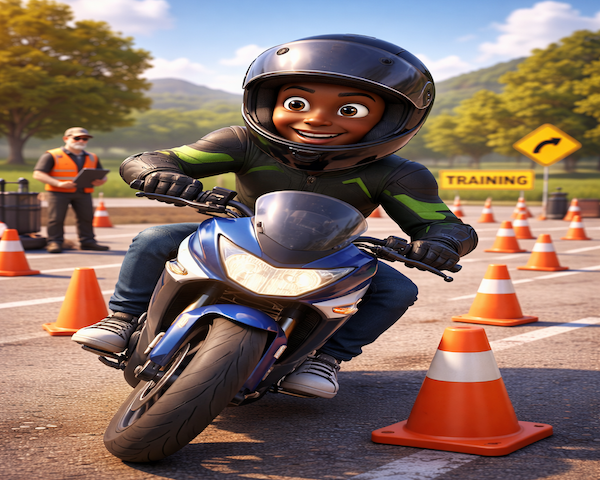
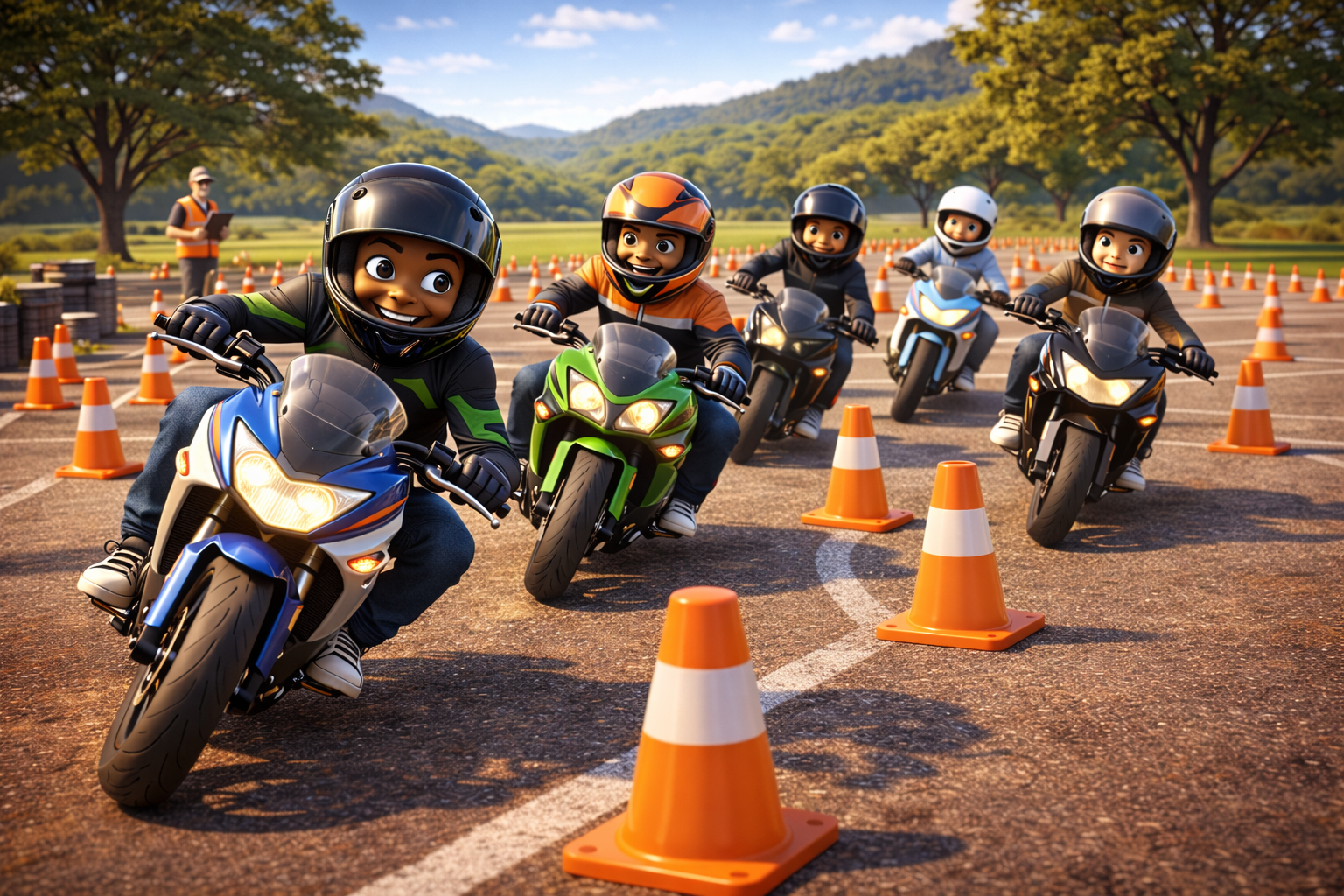
The range is usually a massive parking lot painted with colorful lines that look like an abstract art piece. Each shape has a purpose: weaving, braking, turning. You’re given a small training bike, typically in the 250cc range, forgiving enough for mistakes but powerful enough to feel real. The first time you let out the clutch and the bike moves forward, you realize this is different from anything you’ve done before. It’s not like riding a bicycle, and it’s not like driving a car. It’s both delicate and demanding.
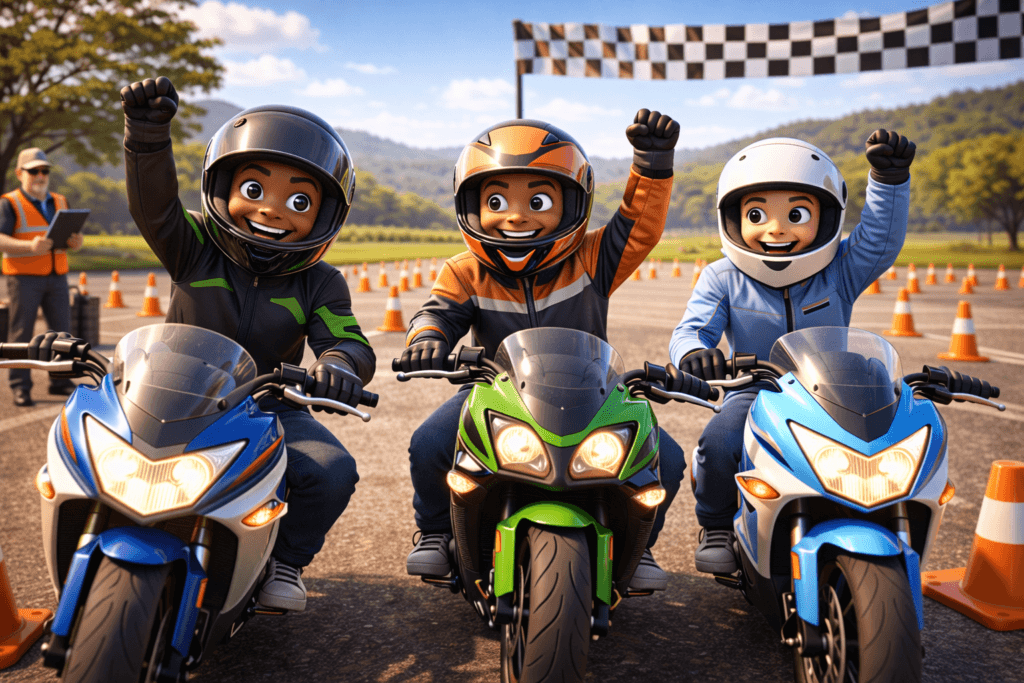
By the end of the course, you’ll ride through a series of tests: controlled stops, figure-eights, quick swerves. The instructors cheer when you succeed, and they coach you when you don’t. One student I watched went from terrified of stalling to grinning ear to ear when she nailed her emergency stop on the final day. That transformation is what keeps people hooked.
The License Waiver and the Sweet Shortcut
Here’s the part that really grabs people’s attention. In many states, completing a Basic RiderCourse lets you skip the dreaded DMV riding test. Yes, that’s right. No more waiting in line under fluorescent lights while some exhausted examiner watches you wobble through a figure-eight on your own bike. Instead, the course itself becomes your test. You pass the riding evaluation at the end, and you walk away with a waiver. That piece of paper is worth more than gold to nervous beginners.
Take Alex, for example. He admitted that the DMV test scared him more than riding itself. “I can deal with traffic,” he said, “but the thought of dropping the bike in front of a DMV examiner gave me nightmares.” When he found out the Basic RiderCourse would waive the test, he signed up immediately. After two days of guided practice, he passed the course evaluation and never had to touch the DMV range. His license arrived in the mail, and his confidence skyrocketed.
Of course, not every state offers the waiver, so you have to check the rules where you live. But even in states where it doesn’t apply, the course gives you such an advantage that the DMV test feels easy afterward. That’s why so many riders see the course not just as training but as a ticket to freedom. It’s a shortcut, yes, but one that makes you better, not worse.
More Than Just Riding Skills
Here’s something people don’t realize until they’re standing in the parking lot with a helmet on: the Basic RiderCourse is about community as much as it is about riding. You start as strangers, awkward and unsure, and by the end you’ve shared inside jokes about stalling, sweaty high-fives after passing exercises, and maybe even phone numbers for future rides. It’s not uncommon to see entire friend groups born in these classes.
One woman told me that she signed up for the course alone because none of her friends rode motorcycles. She was terrified of looking foolish. But by the end of the weekend, she had made two new riding buddies who became her weekend adventure crew. They started small—coffee runs and short highway rides—and eventually planned cross-state trips together. That never would have happened without the shared experience of struggling through the early days of riding.
The instructors are part of that community too. Many of them volunteer their time because they believe in creating safer riders. They remember the student who dropped a bike three times but refused to quit, and they remember the ones who smiled through every challenge. They see the growth up close, and they often check in on students later to see how they’re doing. In a world that sometimes feels isolated, this sense of belonging is priceless.
The First Chapter of a Longer Story
The Basic RiderCourse isn’t the end. It’s just the opening chapter. Once you finish, you’ll realize how much there is left to learn: advanced cornering, group riding, long-distance touring, even track days if speed is your thing. But none of that matters without the foundation. Without the first course, you’re just guessing. With it, you’re building a future.
Think of it like planting a tree. The Basic RiderCourse is the root system. It’s unseen once you move on, but it’s what holds everything together. Riders who take the time to learn properly are the ones who stay safe, stay confident, and stay riding for years. They’re the ones who end up telling stories about adventures across mountains and deserts instead of stories about close calls that could have been avoided.
If you’ve ever dreamed about riding, if you’ve ever watched a motorcycle roar past and thought, “That could be me,” then the Beginner Course is your doorway. It’s not glamorous, and it won’t turn you into a stunt rider overnight. But it will give you something better: the skill to ride tomorrow, and the wisdom to keep riding for the rest of your life.
Final Thought
Riding is supposed to make your life bigger, not shorter.
If something in this post made you think twice, good. That pause is where better decisions live.
Stick around.
Read more.
Learn from stories that weren’t free to earn.
Because the goal isn’t to ride harder.
It’s to ride longer.
— The Squirrelly Biker