Money has a way of sneaking into every dream. You can be picturing yourself riding down a coastal highway at sunset, engine humming, jacket creaking, heart soaring. Then reality barges in and says, “How much is this going to set me back?” Motorcycle courses are no different. The promise of freedom often comes wrapped in a bill. And for beginners, the first question after “where do I sign up?” is usually “what’s the damage?”
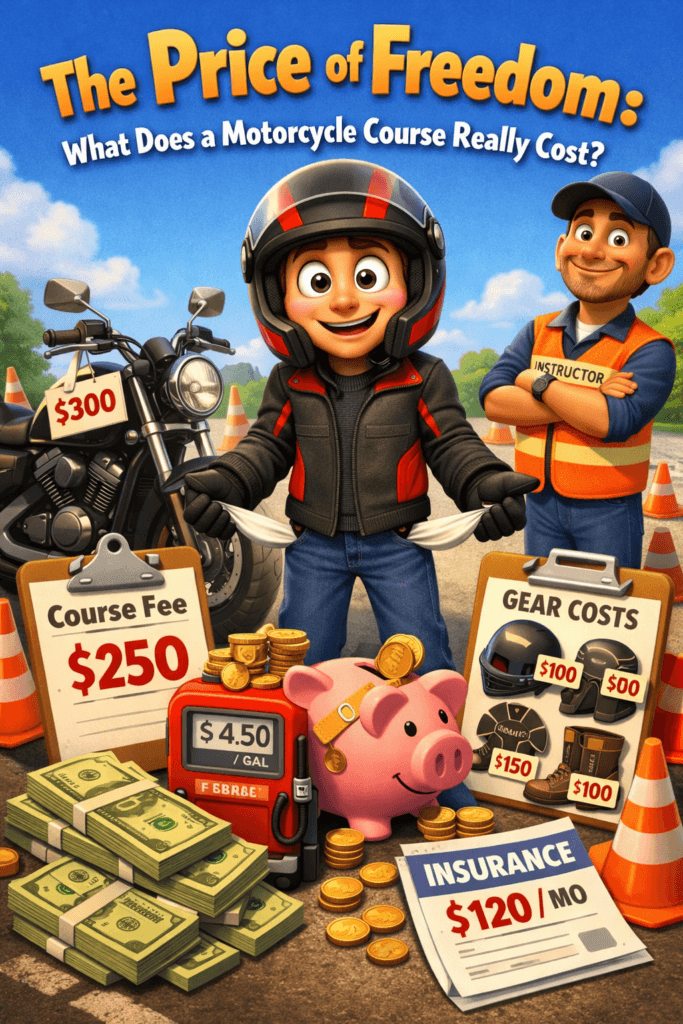
A Beginner or Basic Rider Course isn’t free, unless you’re lucky enough to live in a state or region where it’s subsidized. Prices vary, and the range can surprise you. In some community colleges, you might pay as little as $150 for a weekend of training. In other places, it climbs to $350 or more. That might feel steep, especially if you’re already budgeting for a helmet, gloves, boots, and the bike itself. But think about what you’re getting. A team of instructors, loaner motorcycles, insurance coverage, and a DMV waiver in some states—it’s not just a fee, it’s an investment.
One rider compared it to buying a concert ticket. “I paid $225 for two days of learning, and it was cheaper than seeing my favorite band live. And honestly, it changed my life a lot more than three hours of music.” There’s a point there. Unlike a fleeting experience, this is a skill you keep forever.
Why Prices Swing Like a Pendulum
You might wonder why one person pays $175 while another shells out $350 for essentially the same course. The answer lies in who’s running it. Some courses are operated through state programs that subsidize costs with tax money, lowering the price for riders. Others are run by private schools or colleges that don’t have those subsidies, so they pass the full cost onto students. And then there’s geography—training ranges in big cities often cost more because the land and staffing do.
Take New York, for example. Courses there hover closer to $350 because everything from parking lots to instructors costs more. In Kansas, you might pay half that. Riders in online forums love to swap numbers, sometimes with envy, sometimes with pride. One rider in Texas bragged, “My county offers it for $75 because the state covers the rest.” Another in California sighed, “I dropped $395, and they didn’t even give us decent coffee.”
The swing in prices can feel unfair, but it’s also a reminder that riding culture isn’t standardized. Just like gas prices or insurance, the cost of learning to ride depends on where you live. The good news? No matter where you are, the investment pays off the moment you avoid your first close call thanks to a skill you learned in that course.
The Hidden Discounts Nobody Tells You About
Here’s where it gets interesting. Motorcycle courses often come with secret perks that beginners don’t even realize exist. For starters, many insurance companies offer discounts once you complete a safety course. Ten percent off your premium might not sound glamorous, but stretch that over years of riding and it adds up. Suddenly that $200 course looks like a bargain.
Dealers sometimes sweeten the deal too. Buy a new bike and they might reimburse part of your training fee, figuring it’s better to have you alive and returning for service than wiped out by poor skills. Even employers get in on it. Some companies with large workforces cover motorcycle training under “employee wellness” or “transportation benefits.” One rider I met laughed when he found out his employer would cover 80% of the cost. “I thought HR only cared about gym memberships. Turns out they don’t want me arriving at work in a cast either.”
And then there are scholarships. Yes, really. Some local clubs, veteran organizations, and safety foundations sponsor spots for riders who can’t afford to pay. They see it as an investment in safer roads. It’s worth asking around before assuming you have to pay full freight.
The Cost of Skipping the Course
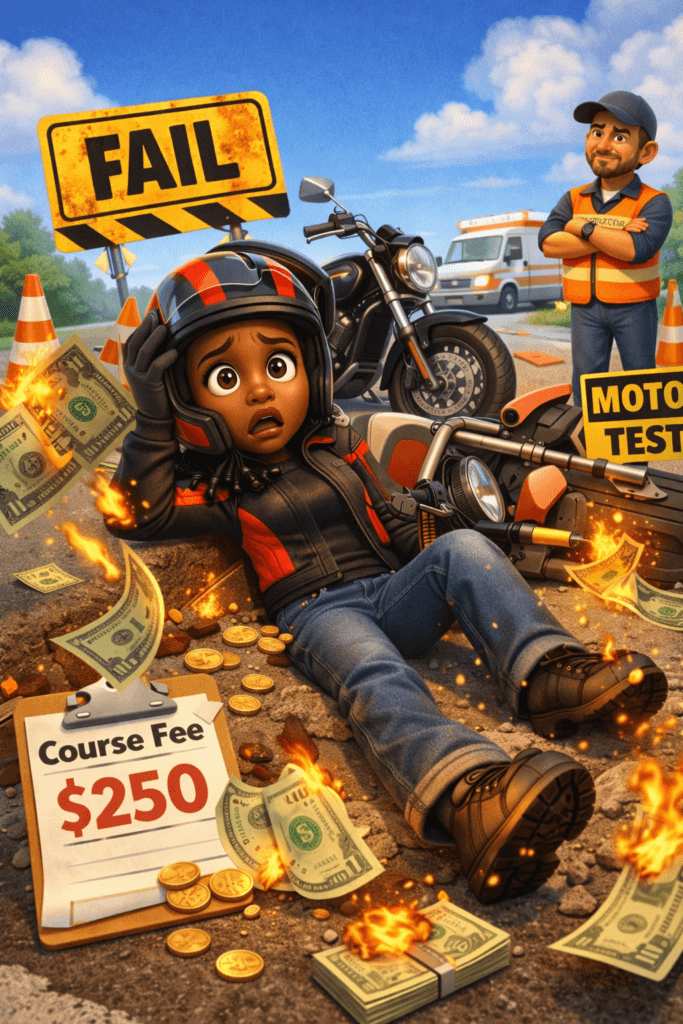
Let’s flip the perspective. What’s the price of not taking the course? At first, you might think you’re saving a couple hundred dollars by teaching yourself. But mistakes on a motorcycle don’t just cost pride, they cost money. One wrong move can bend a clutch lever, dent a tank, or scuff your gear. Those “oops” moments add up fast. Drop a bike once and you’re looking at repair bills that dwarf the price of training.
A friend of mine tried to skip the course and learn with a buddy. He dropped his new-to-him cruiser in a parking lot on day two. The repair bill for the scratched chrome and bent handlebars? $480. More than double what the local course would have cost. His buddy’s advice after the accident? “Maybe you should sign up for that class.” He did, and he’s never forgotten the lesson.
The course doesn’t just save money in the long run. It also saves something harder to measure: confidence. When you’re trained to handle emergencies, you ride smoother, calmer, and safer. That confidence means fewer mistakes, fewer tickets, and fewer “how do I explain this to my insurance company?” moments.
Stories from Riders Who Thought It Was Too Expensive
It’s easy to dismiss a price tag until you hear from people who wrestled with it firsthand. One rider, Sarah, said she hesitated because the $275 fee felt like too much on top of buying a used bike. “I thought, I’ll just practice in a parking lot with YouTube videos,” she admitted. But she signed up anyway after her cousin reminded her that hospital visits cost more than courses. After finishing, she told me, “I’ve spent more on takeout food in a month. And this actually saved my skin.”
Another rider, Marcus, delayed for two years because he didn’t want to spend $350. He finally gave in after realizing his insurance company would cut his premium by $120 annually if he took it. “I should have done this from the start,” he said. “It literally pays for itself in three years.” That’s the part that sticks with you: the cost fades, but the skills remain.
Even riders who felt burned by high prices still admit it was worth it. One man in Los Angeles complained that he paid $400 and had to bring his own gloves. But when I asked if he regretted it, he shook his head. “Nope. I walked out with a license waiver and a lot fewer bad habits.”
Is the Cost Worth It? Every Time.
So, is a motorcycle course worth the price? Absolutely. Not just because it teaches you how to ride, but because it builds a foundation that pays dividends in every ride after. You can put a number on tuition, but you can’t put a number on the car you avoid because you learned to brake correctly, or the skid you prevent because you know how to swerve. That’s priceless.
The funny thing is, the money part usually feels huge before you sign up. Afterward, it feels small. It shrinks in the rearview mirror as the bigger picture comes into focus. You’re safer, more confident, and part of a community that values life on two wheels.
The next time you find yourself hesitating over a course fee, remember this: you’re not just paying for two days of training. You’re buying a key that unlocks the rest of your riding life. Compared to the cost of ignorance, hesitation, or regret, it’s the cheapest deal you’ll ever get.

Final Thought
Riding is supposed to make your life bigger, not shorter.
If something in this post made you think twice, good. That pause is where better decisions live.
Stick around.
Read more.
Learn from stories that weren’t free to earn.
Because the goal isn’t to ride harder.
It’s to ride longer.
— The Squirrelly Biker