You passed the course. You got the card. You walked out of that parking lot with a little laminated proof that says you know how to ride a motorcycle, and for a minute, that felt like enough.
It is not enough. It was never supposed to be enough. And somewhere between the DMV counter and your first solo ride in real traffic, most riders quietly figure that out, then spend the next year pretending they already knew it all along.
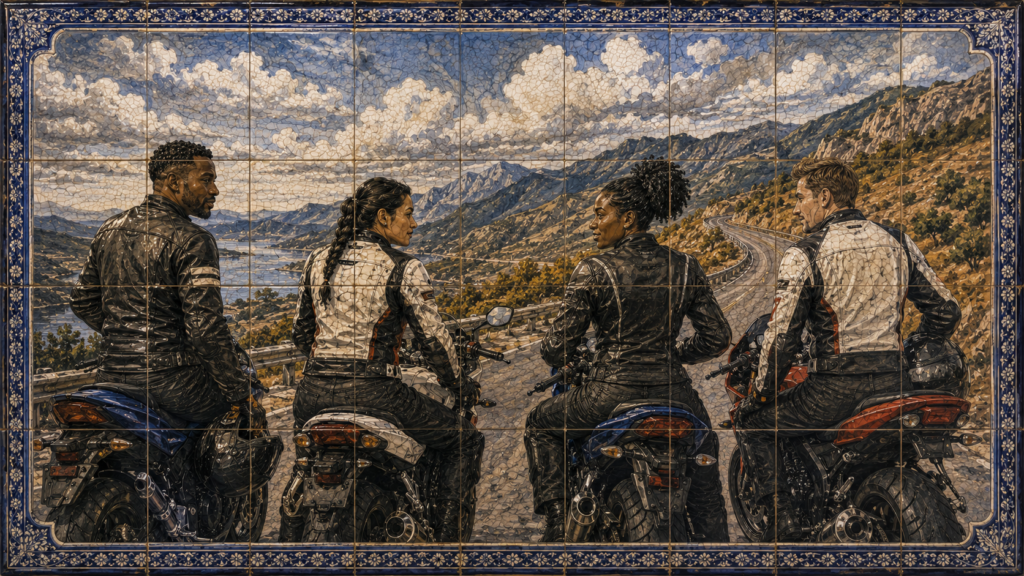
The Course Was Never the Finish Line
The Motorcycle Safety Foundation course does exactly what it is built to do. It teaches you the fundamentals in a controlled space with cones instead of cars, low speeds instead of highway merges, and an instructor watching your every move instead of a guy behind you riding your bumper. That course exists to keep you from dying in your first fifty miles. It is not designed to make you a rider. It is designed to make you safe enough to start becoming one.
Somewhere along the way, a lot of new riders start treating that card like a diploma instead of a permission slip. They think passing means they arrived. They compare notes with lifers at the gas station, nod along like they belong in that conversation, and never mention that their entire riding résumé is a weekend course and maybe forty miles since. Nobody is trying to lie. They just do not know yet how big the gap is between the parking lot and the real road.
The instructors know this too, by the way. Most good ones will tell you flat out, on your last day, that the course was never the hard part. They have watched hundreds of riders leave that lot feeling ten feet tall, and they know exactly how many of those riders will get humbled by a rainy ramp within the month. That is not a criticism of the course. It is just an honest description of what it can and cannot teach you in a weekend.
What the Card in Your Wallet Actually Proves
Here is the honest version. That license proves you can execute basic controls under ideal conditions. It does not prove you can read a car about to drift into your lane because the driver is looking at their phone. It does not prove you can handle a sudden downpour on a curve you have never ridden before. It does not prove you know what your bike does when the back tire loses grip for half a second on gravel you did not see coming.
None of that is a knock on the course or on you for taking it seriously. Every rider, including the ones who have been at this for decades, started exactly where you are standing right now. The problem is not that you are new. The problem shows up when new riders start acting like the newness is something to hide instead of something to work through out loud.
Think about what the card actually measures. Slow speed maneuvers in a parking lot. Braking on dry pavement in a straight line. Turning within painted boundaries at a speed a determined jogger could match. Real riding rarely looks like any of that. Real riding is unpredictable traffic, changing weather, tired drivers, and a hundred small decisions per mile that nobody can simulate on a closed course. The card tells the state you are legally allowed to be out there. It does not tell you, or anyone else, that you are ready for everything out there.
The Test Nobody Grades
The real test does not happen in a parking lot with an instructor holding a clipboard. It happens on a Tuesday afternoon when a truck cuts you off and your hands do something before your brain even finishes processing the threat. It happens the first time you ride in rain and realize your instincts from the course are not quite matching what your bike is actually doing under you. It happens every single time you get on the bike and the road asks you a question the classroom never covered.
Nobody hands out a passing grade for that test. There is no card at the end of it. The only feedback you get is whether you are still upright, and whether you learned something from the ride that you did not know before you left the driveway. That is the real curriculum, and it runs for as long as you keep riding. Riders who last decades will tell you the same thing. The learning never actually stops. It just gets quieter.
That quiet part matters. Nobody posts about the near miss on the interstate where they caught a wobble before it became a highside. Nobody brags about the time they misjudged a curve and had to fight the bike back onto their line. Those moments happen constantly, to riders at every level, and almost none of them ever get talked about out loud. That silence is not because they are rare. It is because admitting them still feels like admitting weakness, even to riders who have been doing this for twenty years.

Confidence You Fake vs Confidence You Earn
There is a specific kind of rider who shows up at every meetup, every gas station, every group ride. They have the gear dialed in. They talk the talk. They nod at the right moments when the conversation turns to lean angles or tire pressure. And underneath all of it, they are still white-knuckling it every time traffic gets tight, terrified that someone will ask them a question that reveals how new they actually are.
That performance costs more than it protects. Faked confidence does not make you safer. It just makes it harder to ask the questions that would actually help you improve, because admitting you do not know something feels like admitting you do not belong. Real confidence on a bike gets built one honest mile at a time, not one convincing conversation at a time. The riders who last are not the ones who never felt unsure. They are the ones who kept riding anyway and let the uncertainty teach them something instead of hiding it.
Nobody in this community is impressed by a rider who never admits a mistake. They are impressed by the rider who tells the truth about the time they almost dropped it in a parking lot, because that story is useful. It helps the next new rider feel less alone in the exact same spot. The gatekeeping instinct that says new riders have to prove themselves before they are allowed to speak honestly does not protect the culture. It just makes the culture harder to enter and lonelier once you are in it.
There is a simple way to spot the difference between earned confidence and performed confidence. Earned confidence sounds like specifics. It sounds like a rider who can tell you exactly what they do differently in the rain now, or exactly what changed in how they take a blind curve after a bad scare. Performed confidence sounds like general statements. It sounds like a rider who talks about riding well in the abstract but goes quiet the moment the conversation gets specific about what actually happened on their last ride.
That card in your wallet was never the finish line. It was the starting gun. Everything after the parking lot is the actual education, and it does not come with a certificate.
So here is the honest question. Think about the last time you were on the bike and something happened that you were not fully ready for, a merge, a curve, a sudden stop ahead of you. What did you actually do in that moment, and did you tell anyone the truth about it afterward, or did you clean up the story before it left your mouth?
Ronnie Canty | The Squirrelly Biker