I pulled into a gas station last month next to a guy on a bike so clean I could see my own reflection in the tank. Every bolt matched. Every accessory looked like it came out of the same catalog photo shoot. He caught me looking and said, “Just got her set up right.” I nodded and said something polite. But what I was actually thinking was that his bike looked less like a machine he rode and more like a machine he was still trying to convince himself he’d earned.
That moment stuck with me longer than it should have. Because I’ve had bikes both ways. I’ve made purchases out of real need and I’ve made purchases because I wanted somebody at the next stoplight to look over and think I knew what I was doing. Every rider has done some version of both. The question worth asking isn’t whether you’ve ever bought gear for the wrong reason. It’s whether you can tell the difference now.
What Your Setup Actually Tells People
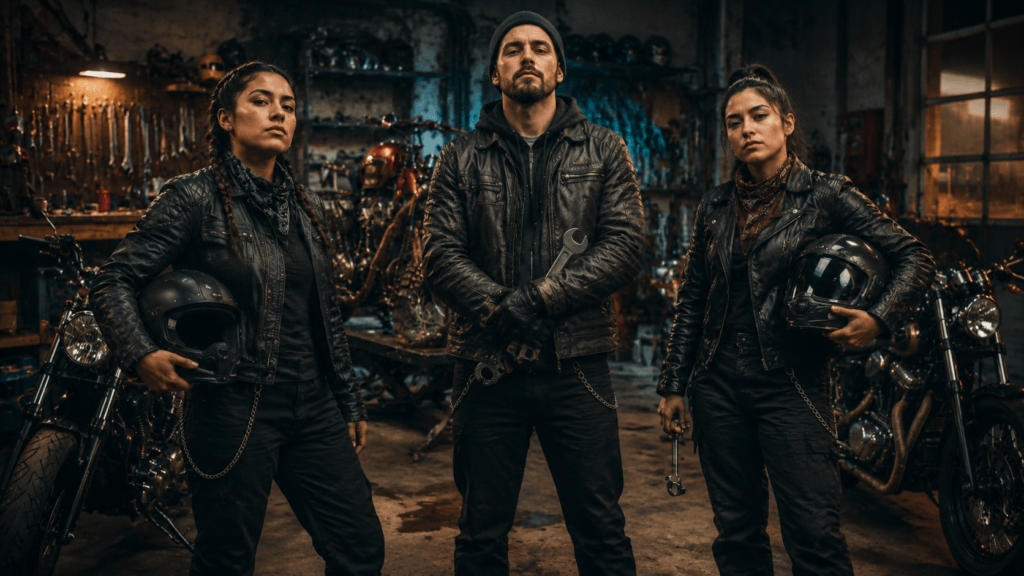
A bike builds itself over time, whether you’re paying attention or not. Every part you add, every mod you skip, every piece of gear you carry says something, and most of it has nothing to do with what you meant to say. Riders read other riders’ setups the way people read handwriting. It’s not fair, and it’s not always accurate, but it happens every single time two bikes end up parked next to each other.
Here’s the part nobody likes to admit. A setup can be honest or it can be a costume. An honest setup grows out of miles. You added the tank bag because you kept forgetting your rain gear and got soaked twice. You swapped the seat because your lower back started talking to you after ninety minutes. You upgraded the headlight because you almost didn’t see a deer at dusk on a back road you ride every week. That kind of build has a story behind every part, and the story is boring in the best possible way. It’s just you, solving problems you actually had.
A costume setup grows out of something else. It grows out of watching other riders and wanting to look like you belong in that group before you’ve put in the time. There’s nothing evil about that instinct. Everybody wants to belong somewhere. But when the gear shows up before the experience does, the bike starts talking louder than the rider, and other riders can usually tell.
The New Rider Who Builds Backward
I’ve watched plenty of newer riders make this mistake, and I made a version of it myself decades ago. You get the bike, and instead of riding it and letting your actual needs show themselves, you go build a complete identity in a single weekend. Full riding suit, matching luggage, a dozen accessories, all before you’ve put five hundred miles on the odometer. It looks impressive in photos. It doesn’t hold up under questions.
Somebody asks why you picked that particular exhaust and you give an answer that sounds like it came from a forum post, because it did. Somebody asks how the bike handles in the rain and you go quiet, because you haven’t ridden in the rain yet. None of that makes you a fraud. It makes you new. The problem isn’t being new. The problem is building a setup that’s trying to hide it.
I get why people do this. Riding culture can feel like a club with an entry fee nobody wrote down anywhere, and a fully kitted-out bike feels like proof of membership. But real membership doesn’t come from the parts list. It comes from showing up again after the ride that scared you, from riding home cold and wet because you didn’t check the forecast, from laying the bike down in a parking lot at two miles an hour and picking it back up without making it a whole thing. Nobody at the coffee shop meetup is grading your accessories. They’re watching how you carry yourself once the engine’s off.
Buying Gear Like a Rider Instead of a Customer
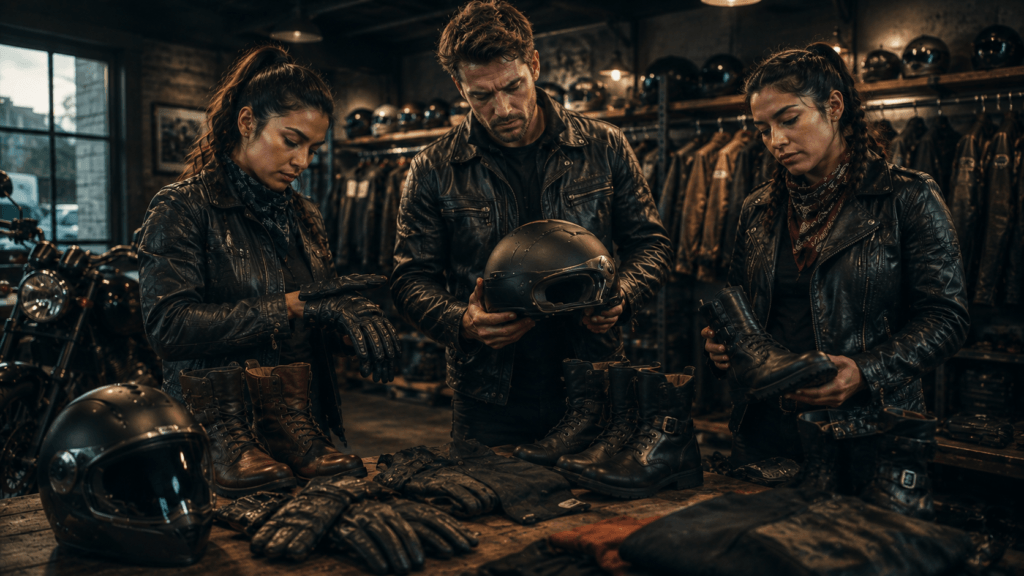
There’s a difference between buying gear like a rider and buying gear like a customer, and it shows up in the timing more than the price tag. A rider buys something because a real ride exposed a real gap. A customer buys something because an ad, a video, or a friend’s setup made a gap feel like it existed even when it didn’t.
I’m not telling you to ride around underprepared just to prove some kind of point. Good gear keeps you upright and keeps you alive, and there’s no honor in cutting corners on a helmet to save sixty bucks. What I’m saying is slow down on the buying. Let the bike tell you what it actually needs instead of deciding in advance what a “real rider’s bike” is supposed to look like. Half the best setups I’ve seen belonged to riders who took two years to get there, one honest problem at a time. The ones that get thrown together in a single afternoon almost always get rebuilt within a year anyway, once the rider figures out what they actually use.
There’s also a quieter cost to building backward that doesn’t show up on a receipt. When your setup outpaces your experience, you start riding a little differently. You start protecting the image instead of paying attention to the road, because some part of you is managing how the bike looks instead of how the ride is going. That’s a dangerous place to have your attention living, even for a few seconds at a time.
The Setup That Ages Well
The bikes I respect most aren’t the cleanest ones. They’re the ones with a scuff on the tank bag from a strap that got adjusted a hundred times, a headlight that’s slightly off-center because somebody fixed it themselves after a low-speed tip-over, grips that are worn exactly where that rider’s hands actually sit. None of that photographs well. All of it means something.
A setup that ages well isn’t one that stays pristine. It’s one that keeps changing because the rider keeps riding and keeps noticing what actually matters out there. If your bike looks exactly the same a year from now as it does today, that’s not consistency. That might just mean you stopped paying attention to what the road was trying to tell you.
One Thing to Actually Do
Before you read anything else today, go look at your own bike. Not in your head. Actually walk out to it if you can. Pick one thing on it, one accessory, one mod, one piece of gear you carry every time, and ask yourself honestly why it’s there. Did a real ride teach you that lesson, or did you buy it because you wanted to look like the kind of rider who already knew that lesson before you’d learned it yourself?
You don’t have to answer that one out loud to anybody. But answer it to yourself, and be honest about which kind of setup you’re actually building.
Ronnie Canty | The Squirrelly Biker