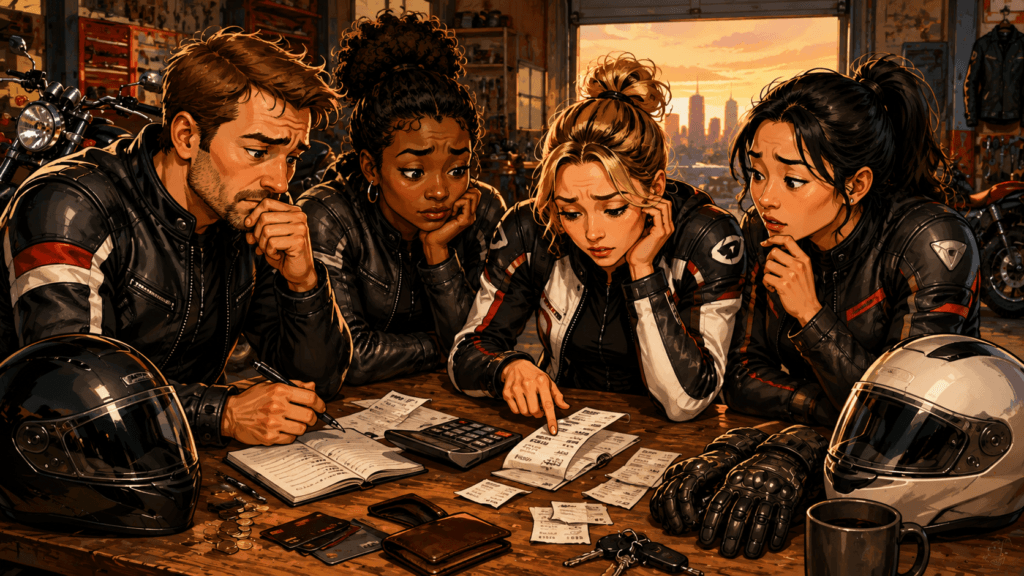
The Number Nobody Says Out Loud
Walk into any bike night and you can spot it in about ten seconds. Somebody’s standing next to their setup, arms crossed, doing that thing where they’re not quite bragging but they’re not quite not bragging either. The jacket costs what most people pay for a car payment. The helmet has a name brand that gets said like a password. And somewhere in that conversation, whether anyone says it directly or not, there’s a number floating in the air. What did you spend to get here.
Here’s the thing that took me too long to figure out. That number has almost nothing to do with whether you can ride. It’s got nothing to do with how you handle a tight corner, how you read traffic three cars ahead, or whether you know your bike well enough to hear when something’s off before the dash lights up. Riding is a skill. Spending is just spending. Somewhere along the way, this community let those two things get tangled up, and it’s been quietly pushing people out the door ever since.
Where the Gatekeeping Actually Comes From
I’ve been riding a long time, and I’ve watched this play out in a hundred different parking lots. Somebody shows up on a bike that cost less than the boots the guy next to him is wearing, and you can feel the temperature change. Nobody says anything cruel. It’s smaller than that. It’s the pause before someone asks about the bike. It’s the question about when they’re going to “upgrade.” It’s the subtle assumption that a cheaper setup means a less serious rider.
That assumption is backwards, and honestly, it’s a little embarrassing when you say it out loud. Some of the sharpest riders I know bought used, wrenched on their own bikes in a driveway with a borrowed torque wrench, and rode for years before they ever owned a jacket that wasn’t from a discount rack. They didn’t skip gear because they didn’t care. They built a setup that worked with what they had, and they got better at riding because the money wasn’t there to buy their way around the learning curve.
The gatekeeping around cost isn’t really about safety or quality, even though it gets dressed up that way. It’s about status. And status has never once made anybody a better rider. It just makes the club smaller, and it makes the people standing outside the circle wonder if they even belong in this world at all.
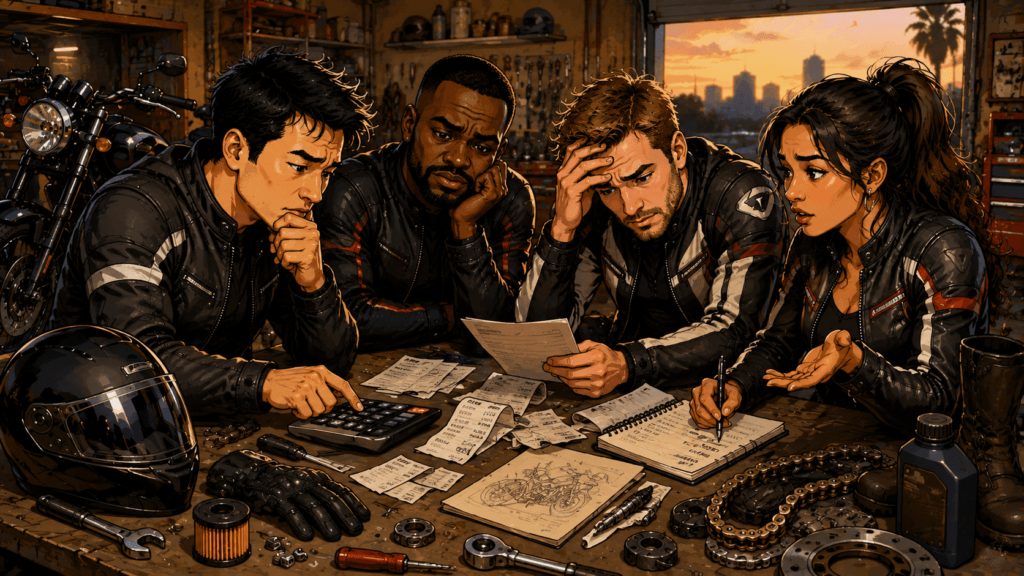
What Riding Actually Costs
Let’s talk real numbers for a second, because the industry benefits from you not knowing them. A solid used bike in good mechanical shape can run you a few thousand dollars, sometimes less if you’re patient and know what to look for. A helmet that meets safety standards and fits your head correctly doesn’t require a four-figure price tag. Riding gear has gotten genuinely good at every price point, not just the top one. The stuff that actually keeps you upright and protected exists well outside the premium aisle.
What costs more than people expect is the stuff nobody markets. Insurance. Maintenance you can’t put off. The gear you replace after it does its job in a get off. Riding gets expensive in the boring places, not the flashy ones. Meanwhile the flashy stuff, the branded jackets and the bikes with the biggest number on the sticker, get treated like the entry fee for legitimacy when they’re really just optional extras for people who have the extra to spend.
I’m not saying don’t buy nice things if you can afford them. Buy what makes you happy and keeps you safe. I’m saying stop measuring other riders by what they paid, because it tells you almost nothing about who they are on two wheels.
The Cost of Being Priced Out of Belonging
Here’s what worries me more than any of the money talk. Somewhere out there is a person who wants to ride, who’s been quietly saving up, who’s watching bike night from the sidelines because they’ve absorbed the message that they need more before they’re allowed to show up. That message came from us. From this community. From every offhand comment about someone’s “beginner bike” or someone’s “budget gear” said with just enough edge to sting.
That person might never walk into that parking lot. They might decide riding isn’t for people like them, not because they can’t handle a motorcycle, but because they got the sense early on that the price of entry was steeper than the cost of the machine. That’s a real loss. Not just for them, but for a culture that’s supposed to be about freedom and grit, not about who can afford to look the part.
The riders who built this culture, the ones who came up decades ago wrenching in garages and riding whatever they could get running, would probably find the price gatekeeping a little ridiculous. Riding used to be the affordable rebellion. Somewhere along the way parts of this world turned it into a status symbol, and that shift didn’t happen by accident. It happened one comment, one look, one assumption at a time.
What This Actually Comes Down To
Off and on, I’ve spent over forty years on two wheels, and if there’s one thing I know for certain, it’s that the bike doesn’t care what you paid for your jacket. The road doesn’t check your gear brand before it teaches you something. What matters is whether you show up, whether you’re paying attention, and whether you’re willing to keep learning long after the new bike smell wears off. Everything else is decoration.
If this community wants to stay alive and keep growing, it needs more people walking through the door, not fewer. And the fastest way to keep the door narrow is to keep pricing belonging like it’s a luxury item instead of a mindset.
So here’s the question I want you to sit with for a second, honestly, no performing it for anyone. Have you ever looked at another rider’s setup, the age of their bike, the brand of their gear, and quietly decided they weren’t as serious as you because of it. Not what you’d say out loud. What actually crossed your mind in that moment. That’s the thing worth being honest about, because that’s the moment where this whole gatekeeping problem either keeps going or starts to end.
Ronnie Canty | The Squirrelly Biker