
Graduating your first motorcycle course is not the moment people think it is.
From the outside, it looks like a clean win. You pass the test, get the certificate, maybe take a picture, maybe celebrate a little. It feels like a finish line. Something completed. Something checked off.
But that is not how it feels from the inside.
From the inside, it feels like standing at the edge of something you now realize is much bigger than you expected. You are proud, yes. Relieved, definitely. But there is also a quiet awareness settling in.
You now know just enough to understand how much you do not know.
And that changes everything.
The Pressure You Didn’t Expect to Carry
Most people walk into their first motorcycle course thinking it will be simple.
They have driven cars for years. They understand traffic. They know how roads work. How hard could it be to transfer that knowledge onto two wheels?
Then the course starts.
Suddenly, your hands and feet are doing different things at the same time. The clutch demands precision. The throttle punishes overreaction. Your balance is not something you can ignore anymore. Every small mistake is immediate and noticeable.
By the time you reach the evaluation, you are carrying more pressure than you expected.
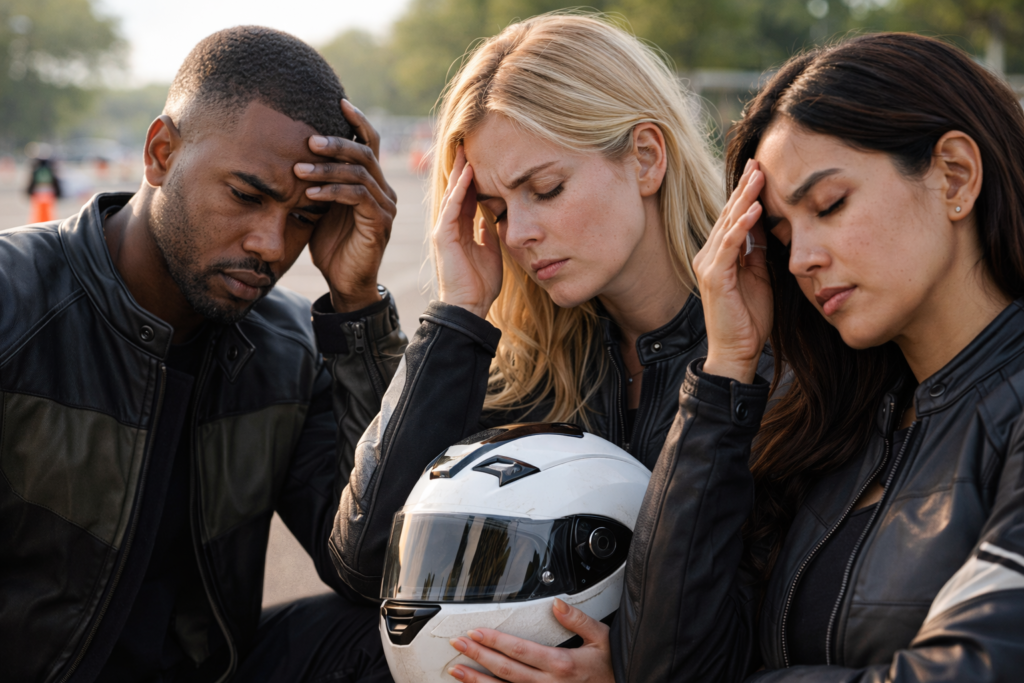
Not because the test is impossible, but because you have felt how easy it is to mess up simple things. You have stalled. You have wobbled. You have overcorrected. You have had moments where your brain moved faster than your body could follow.
So when you pass, the first thing that hits is not pride.
It is release.
Your shoulders drop. Your breathing slows. You realize you made it through something that demanded your full attention from start to finish. That kind of pressure leaves a mark.
You Stop Underestimating What “Basic” Really Means
Before the course, the word “basic” sounds small.
Basic skills. Basic riding. Basic control.
After the course, that word takes on a different meaning.
You realize that “basic” is not easy. It is foundational. Smooth starts, controlled stops, tight turns, and proper braking are not beginner tricks. They are skills that can take time to develop and even longer to master.
You start to understand why experienced riders still practice these things.
Because when those basics are weak, everything else falls apart.
This realization changes how you approach learning. You stop chasing advanced techniques too early. You stop trying to rush past the fundamentals. You begin to respect repetition, even when it feels boring.
That shift alone separates people who improve from people who plateau.
The Moment You Realize the Course Was Holding You Up
There is a subtle moment that happens after graduation.
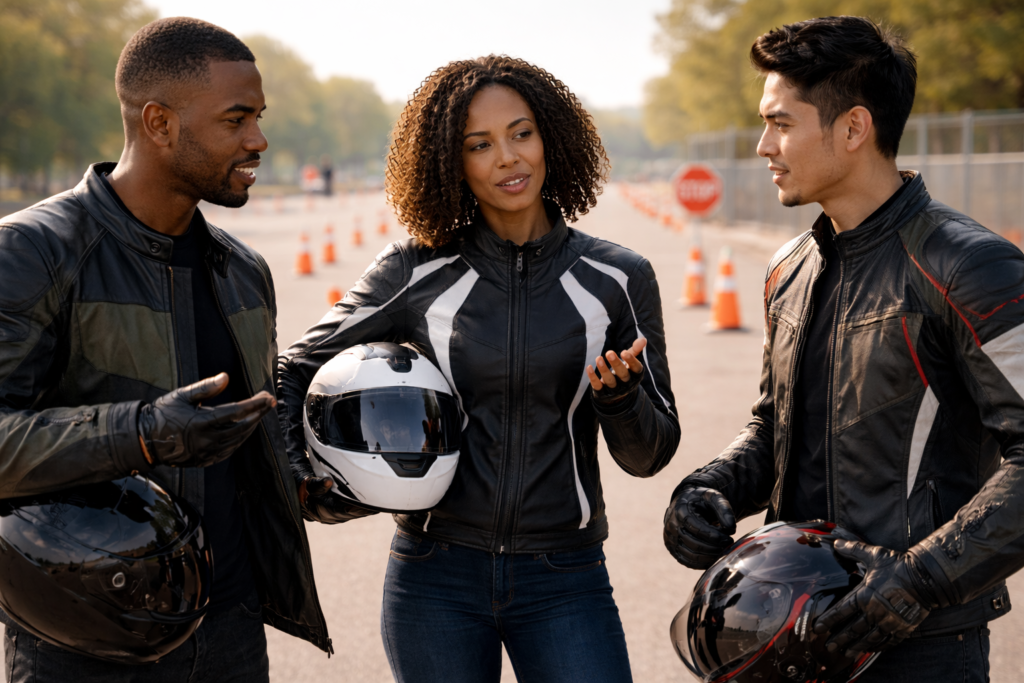
You think back to the course, and you realize how much support was built into it. The controlled environment. The predictable exercises. The constant guidance. The clear structure of what to do and when to do it.
At the time, it felt like learning.
Now, it feels like protection.
Because once you leave that environment, those supports are gone. There is no instructor correcting your timing. No cones marking your path. No one stepping in if you hesitate or make the wrong call.
You are now responsible for everything.
That realization can feel heavy.
Not because you are unprepared, but because you are now aware of how much the environment was helping you succeed. Out on the road, success depends on how well you apply what you learned without that safety net.
Confidence Shows Up, But It Comes With Boundaries
After passing, you do feel more capable.
You know how to operate the bike. You can start, stop, shift, and turn with a level of control that did not exist before. You have proven to yourself that you can learn something that once felt awkward and unfamiliar.
But the confidence is not unlimited.
It comes with boundaries.
You know the difference between a parking lot and a busy intersection. You understand that controlled drills are not the same as real traffic. You recognize that your skills are still developing, not finished.
This creates a more grounded kind of confidence.
You are not guessing anymore, but you are also not overestimating yourself. You operate within what you know, and you stay cautious about what you have not experienced yet.
That balance is rare.
And it is one of the most important things you take with you.
You Start Seeing Mistakes Before They Happen
One of the deeper changes that happens after the course is in how you see errors.
During training, mistakes feel sudden. You stall without warning. You turn too wide. You brake too hard. It feels like things just happen.
After enough repetition, that changes.
You begin to notice the lead-up to mistakes. The slight tension in your hands before you grab too much throttle. The hesitation that throws off your timing. The moment your eyes drop too close instead of looking ahead.
You start catching these things earlier.
That awareness gives you a chance to correct before the mistake fully happens. It slows things down just enough for you to stay in control.
This is not something the course can fully teach.
It is something you begin to feel.
And once you feel it, your learning accelerates.
The Gap Between Skill and Judgment Becomes Obvious
The course teaches you how to operate the motorcycle.
It does not fully teach you how to make decisions in complex situations.
After graduation, you begin to see the difference.
You may know how to turn the bike, but when should you turn? You may know how to brake, but how much is enough in a real situation? You may understand lane positioning, but which position is safest when traffic is unpredictable?
This is where judgment comes in.
And judgment is built through experience, not instruction.
You begin to realize that riding is not just about control. It is about timing, awareness, and decision-making under pressure. That gap between skill and judgment becomes your new focus.
You are no longer just learning how to ride.
You are learning how to think while riding.
You Feel the Weight of Responsibility More Clearly
Passing the course gives you permission to ride.
It also gives you responsibility.
You now understand what can go wrong. You have seen how quickly small errors can create bigger problems. You have felt how little room there is for distraction or hesitation.
This awareness does not make riding less enjoyable.
It makes it more serious.
You begin to take ownership of your decisions in a different way. You think about your condition before you ride. Your focus. Your energy level. Your readiness. You become more intentional about when and how you ride.
This is not fear.
It is respect.
And that respect shapes how you approach every ride moving forward.
Progress Feels Slower, But More Real
During the course, progress is structured.
You move from one exercise to the next. You receive feedback. You see clear improvement over a short period of time. It feels fast because the environment is designed that way.
After graduation, progress slows down.
Not because you are not improving, but because improvement is no longer packaged neatly. It shows up in small, quiet ways. A smoother stop. A better line through a turn. A quicker recognition of a developing situation.
These changes are less obvious.
But they are more real.
They are happening in actual riding conditions, not controlled drills. They are built through repetition without constant correction. That makes them stick.
You start trusting your progress, even when it is not dramatic.
You Leave With More Than You Came For
When you signed up for the course, you probably expected to learn how to ride.
You did.
But you also leave with something else.
You leave with a clearer understanding of your attention. Your patience. Your ability to learn under pressure. Your willingness to stay with something even when it feels uncomfortable.
You see how you respond to mistakes. How quickly you recover. How you handle correction. These insights are not always obvious, but they are there.
The course does not just teach you about motorcycles.
It shows you how you operate.
And that knowledge carries further than most people expect.
Graduation Feels Like a Door, Not a Destination
By the time you finish your first motorcycle course, something important has shifted.
You no longer see riding as a simple skill you either have or do not have. You see it as a process. Something that develops over time through attention, repetition, and experience.
The certificate you receive does not feel like a final stamp.
It feels like access.
Access to real roads. Real decisions. Real consequences. Real growth.
And that is why the feeling is hard to describe.
It is not just pride.
It is awareness.
You stepped in thinking you were learning how to ride.
You stepped out realizing you have only just started learning how to think like a rider.
Final Thought
Riding is supposed to make your life bigger, not shorter.
If something in this post made you think twice, good. That pause is where better decisions live.
Stick around.
Read more.
Learn from stories that weren’t free to earn.
Because the goal isn’t to ride harder.
It’s to ride longer.
R.L. Canty | The Squirrelly Biker